
Myofunctional Disorders in Children: More Than Just a Tongue Problem
When parents hear the term orofacial myofunctional disorder (OMD), they often wonder what it means and whether it's something they should be concerned about. The truth is, myofunctional disorders can affect much more than the mouth. They can impact breathing, eating, speaking, sleeping, and even facial development.
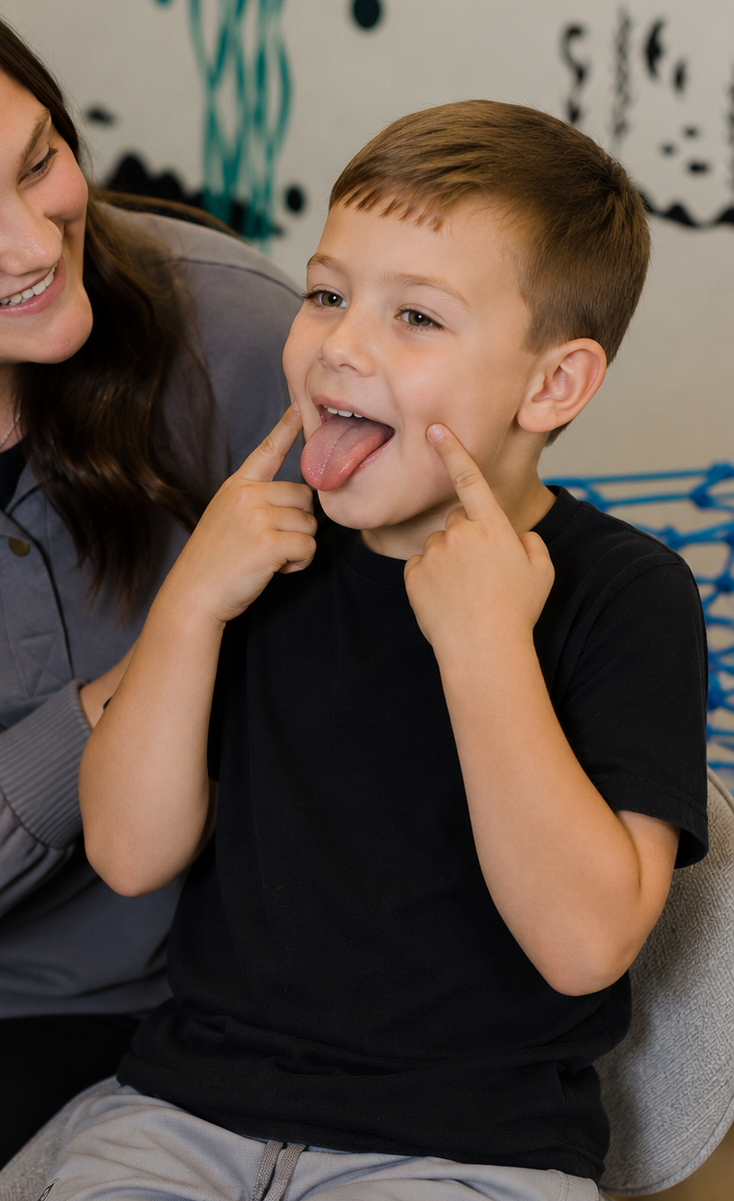
The good news? With the right evaluation and treatment, many children can develop healthier movement patterns that support long-term growth and function.
What Is an Orofacial Myofunctional Disorder?
An orofacial myofunctional disorder happens when the muscles of the mouth and face aren't working together the way they should. This can affect how a child breathes, swallows, chews, speaks, and rests their tongue and lips.
Instead of resting on the roof of the mouth, the tongue may sit low in the mouth or push against the teeth. A child may also breathe through their mouth instead of their nose or have difficulty creating the strength and coordination needed for efficient eating and speaking.
Signs Your Child May Have a Myofunctional Disorder

Every child is different, but some common signs include:
Open-mouth posture
Mouth breathing
Tongue thrust when swallowing
Speech sound difficulties
Messy eating or difficulty chewing
Drooling beyond the expected age
Picky eating or gagging with certain foods
Prolonged thumb sucking or pacifier use
Teeth that shift despite orthodontic treatment
Snoring or restless sleep
Having one of these signs doesn't necessarily mean your child has a myofunctional disorder, but it's worth discussing with a healthcare provider if you have concerns.
Why Early Intervention Matters

The muscles we use every day for breathing, eating, and swallowing perform thousands of repetitions each day. When those movement patterns aren't working efficiently, they can influence a child's growth and development over time.
Early intervention can help support:
Better breathing habits
Improved feeding and swallowing
Clearer speech
Healthy facial and jaw development
Improved sleep quality
Better oral habits
Addressing these concerns early can also help children build confidence and reduce frustration during everyday activities.
What Does Therapy Look Like?
Myofunctional therapy focuses on teaching the muscles of the face, lips, tongue, and jaw to work together more efficiently.
Treatment is individualized and may include activities that improve:
Tongue resting posture
Lip strength and closure
Nasal breathing
Swallowing patterns
Chewing skills
Oral motor coordination
Because these skills are used throughout the day, families play an important role in helping children practice new habits during everyday routines.
A Team Approach
Children with myofunctional disorders often benefit from a team approach. Depending on your child's needs, care may involve collaboration with:
Occupational therapists
Speech-language pathologists
Physical therapists
Dentists and orthodontists
ENTs (ear, nose, and throat physicians)
Lactation consultants
Pediatricians
Working together helps ensure that all of the factors contributing to your child's challenges are addressed.
When Should You Seek an Evaluation?
If you've noticed your child consistently breathes through their mouth, struggles with feeding, drools beyond the expected age, snores regularly, or has concerns with speech or swallowing, an evaluation can help determine whether therapy may be beneficial.
You don't have to wait until problems become bigger. Sometimes a simple evaluation provides reassurance. Other times, it helps identify opportunities to support your child's development before small challenges become larger ones.
We're Here to Help
At Kids In Motion, we believe every child deserves the opportunity to eat, breathe, sleep, speak, and grow with confidence. If you have questions about your child's oral development or wonder whether a myofunctional evaluation would be helpful, our team is here to listen, answer your questions, and help you determine the best next step for your family.


Alie treated my child following her adenoidectomy. We couldn't be happier with her progress.